Best Paint Colours for Georgian Townhouses | The Painters London
The Timeless Elegance of Georgian Architecture
In the heart of London’s most prestigious postcodes—from the white-stucco terraces of Belgravia to the red-brick grace of Chelsea—the Georgian townhouse stands as a pinnacle of architectural harmony. Built between 1714 and 1830, these homes were designed with a mathematical precision influenced by Classical Greece and Rome. Proportion, light, and symmetry are the foundations of Georgian design, and choosing the correct paint palette is essential to honouring that heritage while ensuring the space feels contemporary and livable.
For the discerning homeowner, selecting paint colours for a Georgian property is more than a simple redecoration; it is an act of stewardship. At The Painters London, where we have specialised in heritage restoration since 1992, we understand that the way light moves through a grand first-floor drawing room requires a different approach than the intimate proportions of a master suite. This guide explores the most sophisticated colour palettes that resonate with the architectural DNA of London’s historic townhouses.
Historical Authenticity vs. Modern Luxury
Early Georgian interiors were often surprisingly bold. Deep burgundies, sage greens, and even vibrant blues were common in the mid-18th century. However, as the era progressed into the Neoclassical period—championed by architects like Robert Adam—the palette shifted toward softer, more muted tones: stone whites, pale lilacs, and sky blues.
When decorating a townhouse in Mayfair or Kensington today, we tend to recommend a "modern-heritage" approach. This involves using colours that feel historically rooted but are formulated with modern depth and pigment quality. It’s about creating an atmosphere of quiet luxury that allows the period features—such as ornate cornicing and sash windows—to take centre stage.
Choosing the Perfect Neutrals for Hallways and Landings
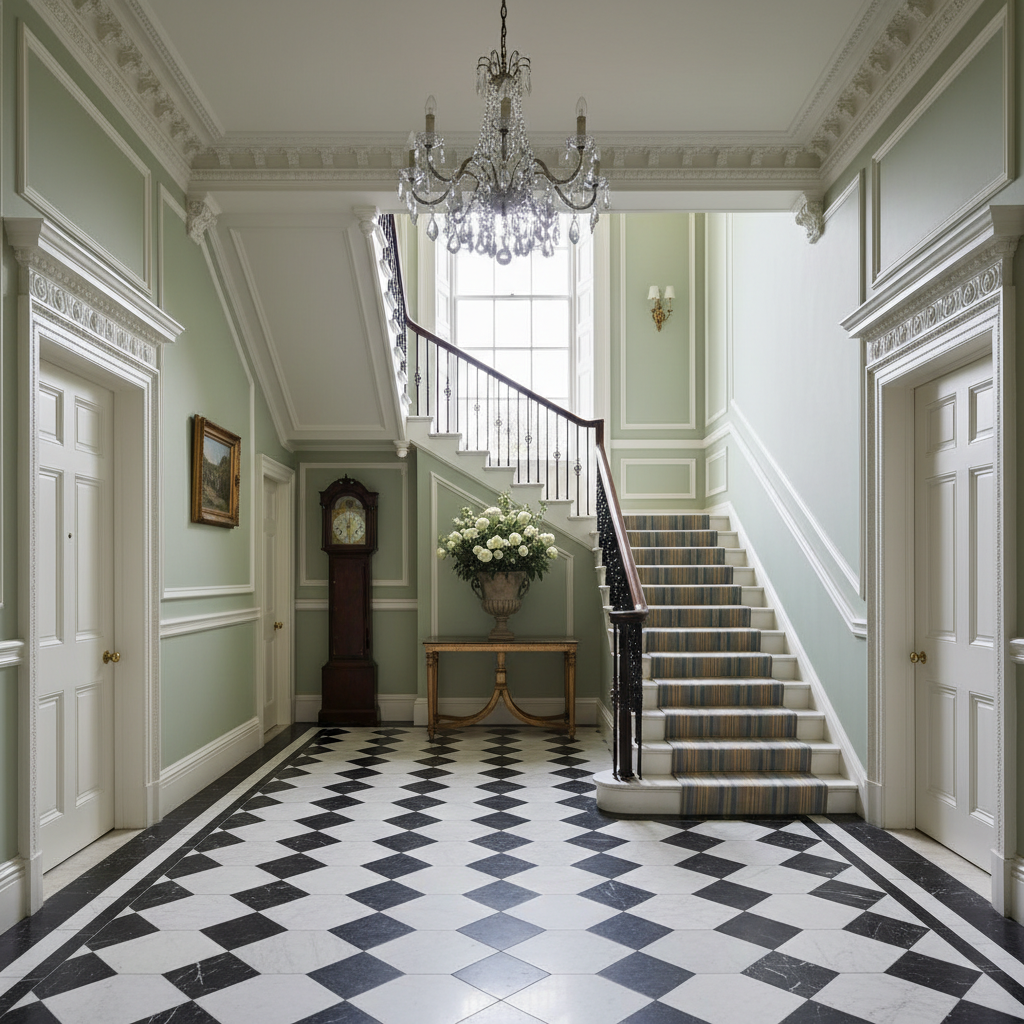
The entrance hall of a Georgian townhouse is designed to impress. These spaces are often characterized by high ceilings and stone flooring. To maintain the sense of flow and architectural grandeur, neutral tones are your greatest ally.
Stone and Chalk Whites
Avoid brilliant whites, which can feel too clinical and sharp against historic plasterwork. Instead, opt for "stony" whites that contain a hint of yellow or grey pigment. These shades mimic the Portland stone used in many London facades. They soften the shadows in corners and provide a sophisticated backdrop for artwork. If your home features original stone stairs, a chalky neutral on the walls will bridge the gap between the masonry and the woodwork.
Soft Greige and Mushroom
For those looking for more warmth than a standard white, "greige" (a blend of grey and beige) is an exceptional choice. It provides a subtle depth that changes throughout the day. In the bright morning light of a South-facing hallway, it feels crisp; in the evening under chandelier light, it becomes cocooning and rich. These tones are particularly effective when paired with bespoke luxury wallcoverings on a feature wall or within the panelling of a dining room.
The Dramatic Drawing Room: Deep Pigments and Texture
The 'Piano Nobile' or first floor is the crown jewel of the Georgian home. With floor-to-ceiling windows and grand proportions, these rooms can handle—and often require—deeper colours to feel anchored.
Imperial Blues and Hague Greens
Deep, inky blues and forest greens are synonymous with luxury London interiors. When applied in a modern estate emulsion or a traditional flat oil finish, these colours absorb light in a way that creates immense depth. In a Mayfair drawing room, a deep green wall creates a stunning contrast against gilded mirrors and mahogany furniture. To elevate this further, consider incorporating expert gilding on the ceiling rose or cornicing to reflect the light and add a touch of gold-leaf opulence.
The Rise of Venetian Plaster
In high-traffic areas or formal reception rooms where you want a seamless, marble-like finish, Venetian plaster is a magnificent alternative to paint. This ancient technique, which we apply by hand, provides a luminous, textured finish that paint simply cannot replicate. It captures the essence of Georgian luxury by adding a subtle movement and sheen to the walls, perfect for reflecting the glow of a London sunset through those iconic sash windows.
Practical Tips for Large-Scale Georgian Decorating
Decorating a five-story townhouse is a significant undertaking. To ensure a cohesive and high-end result, consider these professional tips from our master decorators:
- The 60-30-10 Rule: Use your primary wall colour for 60% of the room, a secondary colour (often for woodwork or built-in cabinetry) for 30%, and an accent colour (for furniture or textiles) for 10%.
- Don’t Forget the "Fifth Wall": In Georgian homes, the ceiling is a canvas. Painting the ceiling in a slightly lighter version of the wall colour, rather than a jarring white, can make the room feel taller and more cohesive.
- Highlight the Woodwork: Use a higher sheen level on the skirting boards, dada rails, and architraves. A soft eggshell or satin finish in a contrasting tone (such as a light grey woodwork against a dark blue wall) highlights the architectural precision of the era.
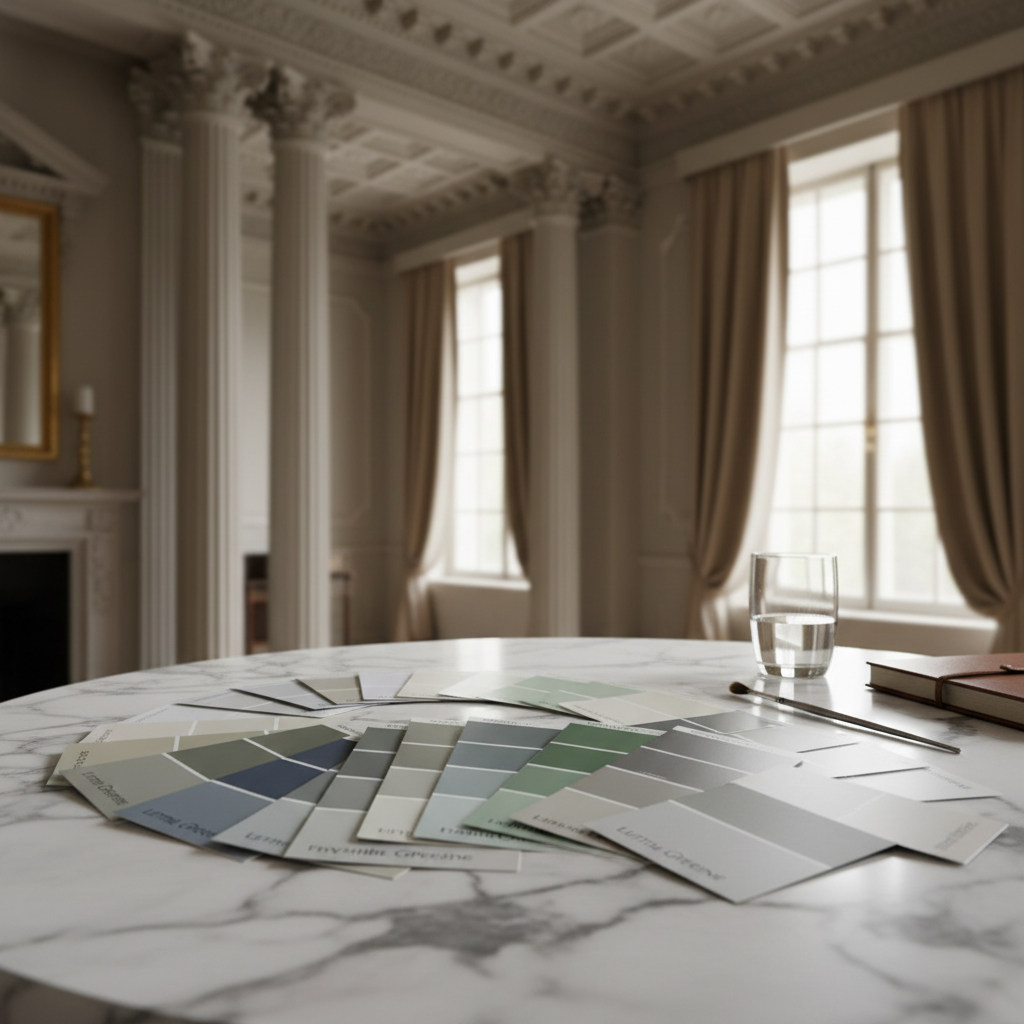
- Test for Light: London’s light is notoriously changeable. Always test your chosen colours on large boards and move them around the room at different times of day—from the grey drizzle of a winter morning to the golden hour of a summer evening.
The Harmony of Chelsea and Kensington Palettes
In areas like Chelsea, where the streets are narrower and the light is often filtered through plane trees, we often recommend "warm" neutrals or soft terracottas to bring a sense of sun-drenched warmth into the home. Conversely, in the expansive squares of Kensington, cooler tones like duck-egg blue or silver-grey can feel incredibly fresh and elegant when paired with white marble fireplaces.
Why Expert Application Matters
The quality of the finish is just as important as the colour itself. Georgian walls are rarely perfectly flat; they bear the character of centuries. Achieving a flawless finish requires meticulous preparation—raking out cracks, using traditional fillers, and sanding to a glass-like smoothness before a single drop of paint is applied.
Furthermore, the choice of material is vital. For heritage restoration projects, we often use breathable paints and traditional lime washes where appropriate to ensure the longevity of the historic fabric. Our team at The Painters London is trained in these specific techniques, ensuring that your investment is protected and your home remains a masterpiece of London architecture.
Conclusion: Transforming Your London Residence
Redecorating a Georgian townhouse is an opportunity to marry the grandeur of the past with the comforts of the present. Whether you opt for a monochromatic palette of sophisticated whites or the dramatic depth of imperial jewels, the key lies in respecting the proportions of the space and the quality of the finish.
If you are looking to restore or refresh your London property, our team of expert decorators is here to provide a bespoke range of services tailored to high-end residential needs. From the initial colour consultation to the final brushstroke, we pride ourselves on delivering an impeccable finish that stands the test of time.
Ready to redefine your home’s aesthetic? Book a consultation with The Painters London today and let us bring your vision to life with the precision and luxury your Georgian townhouse deserves.