Repair or Replace Decorative Mouldings | Heritage Guide
The Art of Preserving London’s Architectural Heritage
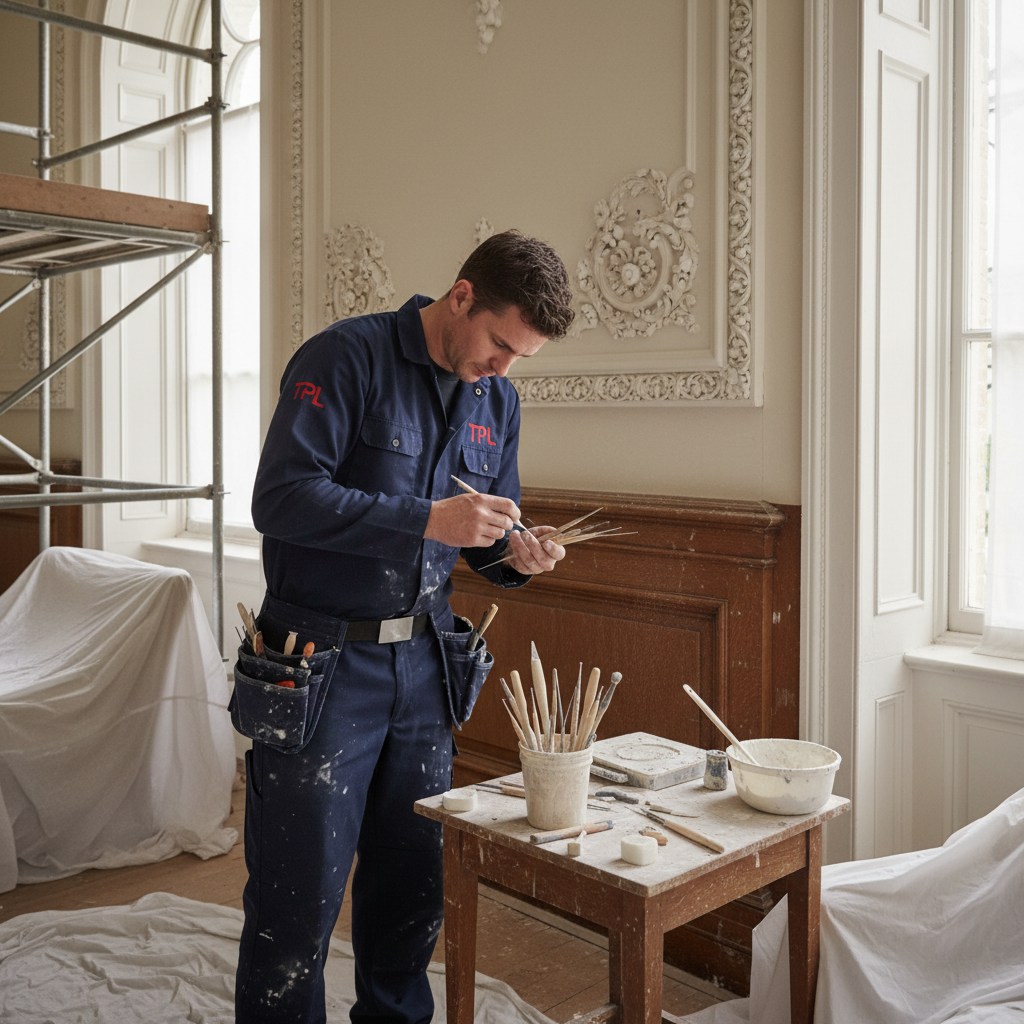
For the discerning homeowner in Central London’s most prestigious postcodes—from the stucco-fronted terraces of Belgravia to the Victorian red-brick manors of Chelsea—decorative mouldings are more than mere accents. They are the structural jewelry of a property. Crown mouldings, ceiling roses, and elaborate cornices define the character and scale of a room, bridging the gap between historical grandeur and contemporary luxury.
However, over decades—and often centuries—these delicate features can suffer. Layers of lead-based paint, moisture ingress, or structural shifts can obscure fine details or cause physical degradation. When faced with crumbling plasterwork or obscured patterns, the luxury homeowner faces a critical decision: should you repair, restore, or replace? At The Painters London, established in 1992, we have spent over thirty years navigating this delicate balance, ensuring that the heritage of London’s finest homes remains intact for future generations.
The Dilemma: Assessment and Professional Diagnosis
Before any work begins, a professional assessment is essential. In areas like Mayfair, many properties are Grade I or Grade II listed, meaning any intervention must be handled with extreme care and, often, legal compliance. The decision to repair, restore, or replace is dictated by the extent of the damage and the historical significance of the original material.
When to Repair: Minor Imperfections
Repair is the least invasive option. It is typically recommended for mouldings that are structurally sound but suffer from localized damage—small chips, hairline cracks, or minor water staining. In these instances, our artisans use traditional lime-based plasters and specialized fillers to seamlessly blend the repair with the existing structure. This approach preserves as much of the original fabrication as possible, which is always the preference in heritage restoration.
When to Restore: Stripping Away the Decades
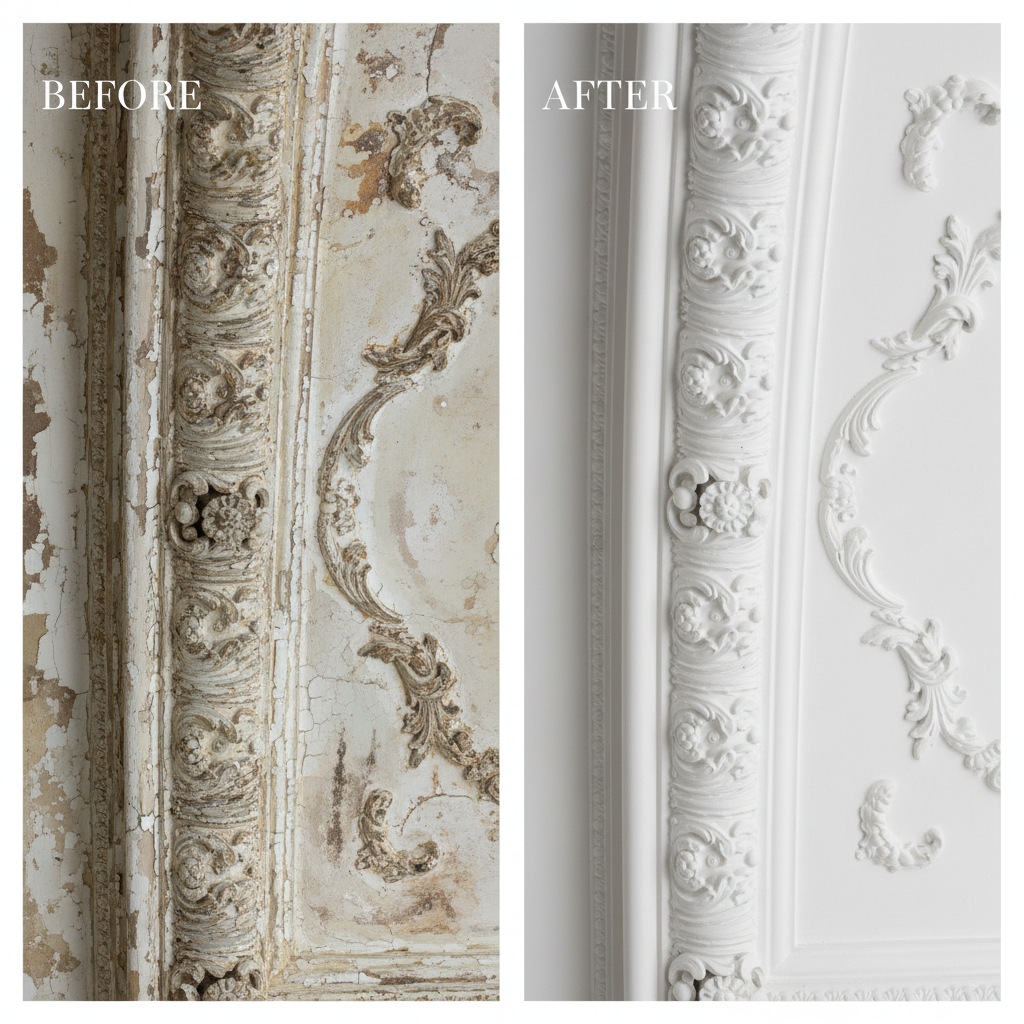
Restoration is required when the original detail is still there but has been "smothered." This is a common sight in Kensington townhouses, where twenty layers of gloss paint applied over a century have turned a sharp, acanthus-leaf cornice into a featureless lump. Restoration involves the painstaking removal of these layers—often using non-caustic chemical peels—to reveal the crisp, original plaster underneath. Once "stripped back," we can then refine the details and apply professional-grade finishes.
When to Replace: Structural Failure and Missing Sections
Replacement is the final resort, usually reserved for sections that have completely crumbled due to dry rot, severe leaks, or previous "modernisation" attempts where original features were hacked away. In these cases, we perform a "squeeze" or take a profile template to create a bespoke mould. This allows us to cast a perfect replica in fibrous plaster, ensuring the new section is indistinguishable from the remaining original work.
The Technical Process of Heritage Plasterwork
Working with decorative mouldings in a luxury context requires a marriage of old-world craftsmanship and modern precision. At The Painters London, we follow a rigorous methodology that ensures longevity and aesthetic perfection.
1. Cleaning and Paint Removal
The biggest enemy of decorative mouldings is paint build-up. For homes in Central London, this paint often contains lead, requiring specialist handling. We use poultice systems that draw the paint away from the plaster without damaging the fragile substrate beneath. This stage is transformative; it often reveals intricate patterns—vines, dentils, or egg-and-dart motifs—that the homeowner didn't even know existed.
2. Stabilization
Old plaster is heavy. In many historic London properties, the laths (the wooden strips holding the plaster) can become detached from the ceiling joists. Restoration often involves "saving" the ceiling by injecting high-strength adhesives or using stainless steel washers to re-secure the mouldings before the aesthetic work begins. Without this step, even the most beautiful paint job will eventually crack.
3. Hand-Modelling and Re-Enrichment
Where small sections are missing, our craftsmen perform "in-situ" hand modelling. Rather than replacing a whole length of cornice, we can rebuild a single leaf or scroll by hand using a hawk and small tools. This maintains the authenticity of the hand-crafted look that mass-produced modern alternatives simply cannot replicate.
Integrating Modern Luxury with Traditional Features
While we respect heritage, we also understand that contemporary London living requires a specific aesthetic. Incorporating decorative mouldings into a modern interior design scheme is one of our specialities. For example, a crisp, restored white cornice acts as the perfect frame for a room finished with high-end bespoke wallcoverings.
Furthermore, decorative mouldings provide the ideal opportunity for specialist finishes. A restored ceiling rose can be elevated through professional gilding, using 23-carat gold leaf to catch the light from a central chandelier. Alternatively, we often pair traditional plasterwork with Venetian plaster on the wall surfaces to create a textural contrast that feels both historic and ultra-modern.
Common Pitfalls to Avoid
For homeowners managing a renovation in Belgravia or Mayfair, certain mistakes can be costly and detrimental to the property's value:
- Using Coving Instead of Cornice: "Coving" is typically a simple C-shaped profile made of plasterboard or polystyrene. "Cornice" is more elaborate and traditionally cast. Never use DIY-store coving in a high-value London heritage property.
- Over-Painting: Once your mouldings are restored, ensure your decorators use high-quality, breathable paints. Avoid heavy "contract" emulsions that will once again fill the fine details you have worked so hard to uncover.
- Ignoring the Cause of Damage: If a cornice is cracking, there is usually a reason. Before repairing the plaster, ensure any roof leaks or structural vibrations are addressed.
Why Choose The Painters London?
The restoration of decorative mouldings is not a standard decorating task; it is a specialist trade. Since 1992, The Painters London has been the trusted partner for owners of the capital's most prestigious residences. Our deep understanding of London’s architectural history—from Georgian symmetry to Victorian opulence—allows us to provide advice that protects your investment.
We provide a comprehensive range of high-end decorating services, ensuring that every element of your interior, from the floorboards to the highest point of the ceiling rose, is finished to a gallery-standard quality. Our team respects the privacy and sanctuary of your home, operating with the discretion and cleanliness expected in London’s luxury market.
Conclusion: Restoring the Grandeur of Your Home
Decorative mouldings are the soul of a historic London home. Whether you are looking to meticulously restore a damaged Victorian cornice in Chelsea or want to reinstate lost Georgian details in a Mayfair townhouse, the choice of craftsman is paramount. By choosing to repair and restore wherever possible, you preserve the tangible history of London while enhancing the beauty and value of your property.
If you are considering a restoration project and require expert guidance on whether to repair, restore, or replace your decorative mouldings, we invite you to contact us for a professional assessment.
Ready to restore your property’s heritage features to their former glory? Book a bespoke consultation with The Painters London today and let our master craftsmen bring your vision to life.
", "meta_description": "Expert advice on repairing, restoring, or replacing decorative mouldings in London heritage homes. Specialist plaster restoration for Mayfair & Chelsea.", "title": "Repair or Replace Decorative Mouldings | Heritage Guide" }