The Art of Colour Matching for Heritage Properties
The Significance of Historical Colour Palettes in Central London
For owners of Grade I and Grade II listed buildings in Central London, the restoration process is more than a simple refurbishment; it is an act of stewardship. Since our founding in 1992, The Painters London has specialised in the delicate intersection of historical accuracy and contemporary luxury. Nowhere is this balance more critical than in the art of colour matching.
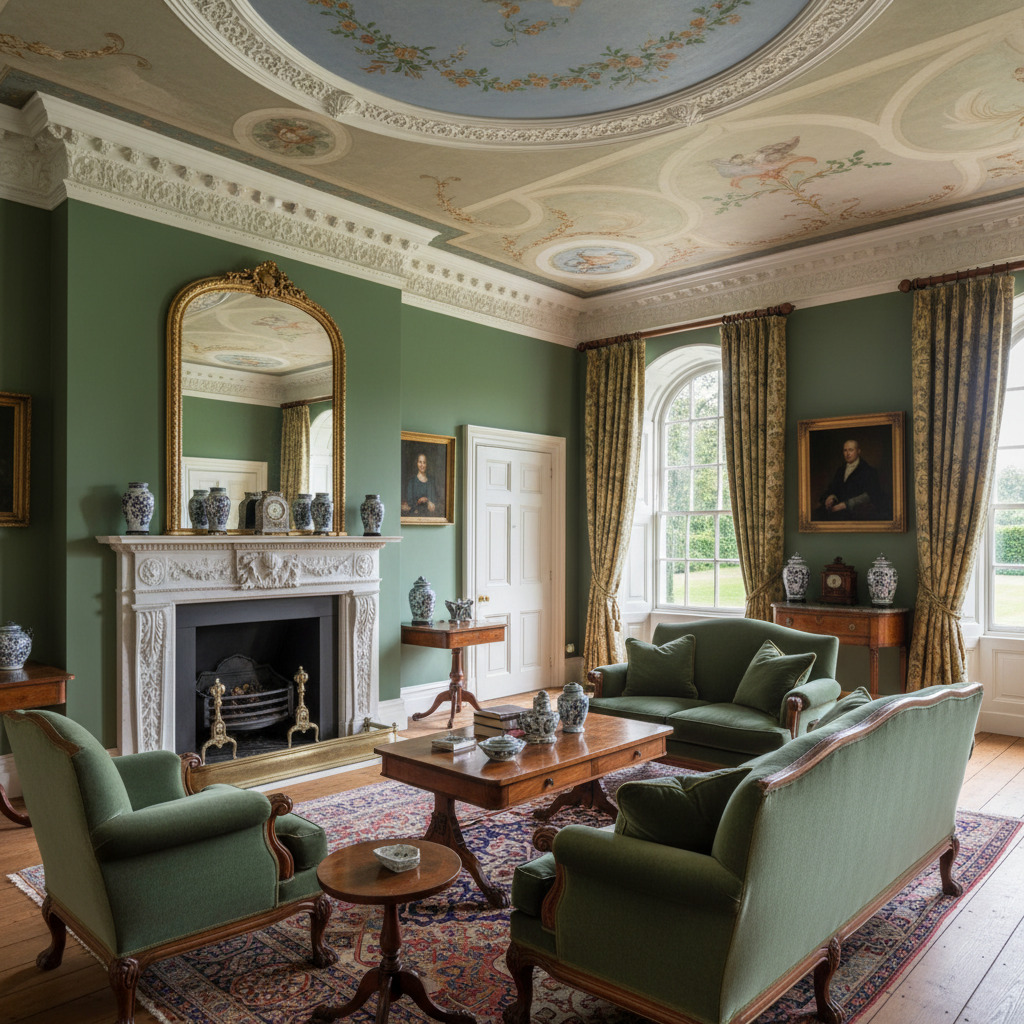
The Georgian, Victorian, and Edwardian residences of Mayfair and Belgravia possess a distinct DNA. The pigments used centuries ago were derived from mineral earths, plants, and even insects, resulting in a depth of colour that modern synthetic paints often fail to replicate. True heritage restoration requires a forensic approach to identify these original hues, ensuring that the property’s architectural integrity remains intact while meeting the aesthetic standards of a 21st-century luxury home.
The Science of Pigments: Why Standard Paint Swatches Fail
Modern mass-market paints use liquid tinting systems that, while convenient, lack the complexity found in traditional lead or linseed oil-based paints. When we walk into a stucco mansion in Kensington or a red-brick townhouse in Chelsea, we often find dozens of layers of paint dating back two hundred years. A standard colour chart from a local hardware store simply cannot capture the nuance of these aged finishes.
The Impact of Light and Texture
The unique quality of London light—the "silver-grey" of the Thames—drastically affects how colour is perceived. A shade that looks perfect in a showroom will look entirely different in a North-facing drawing room in Belgravia. Furthermore, heritage surfaces are rarely perfectly flat. Traditional lime plasters and lath-and-plaster walls have a subtle undulation that catches light differently than modern drywall. This is why we pay such close attention to our bespoke wallcoverings and surface preparation; the substrate is as important as the pigment itself.
Methodology: How We Archive and Replicate Historic Hues
At The Painters London, our colour matching process involves several sophisticated stages to ensure an exacting finish for our clients in Mayfair and beyond.
1. Stratigraphic Analysis
For projects requiring strict historical accuracy, we conduct a stratigraphic analysis. This involves taking a "core" sample of the paint layers. By examining the cross-section under magnification, we can see the house's history—from the original Georgian ochres to the deep greens of the Regency era—and identify the precise layer the client wishes to restore.
2. Spectrophotometry vs. The Expert Eye
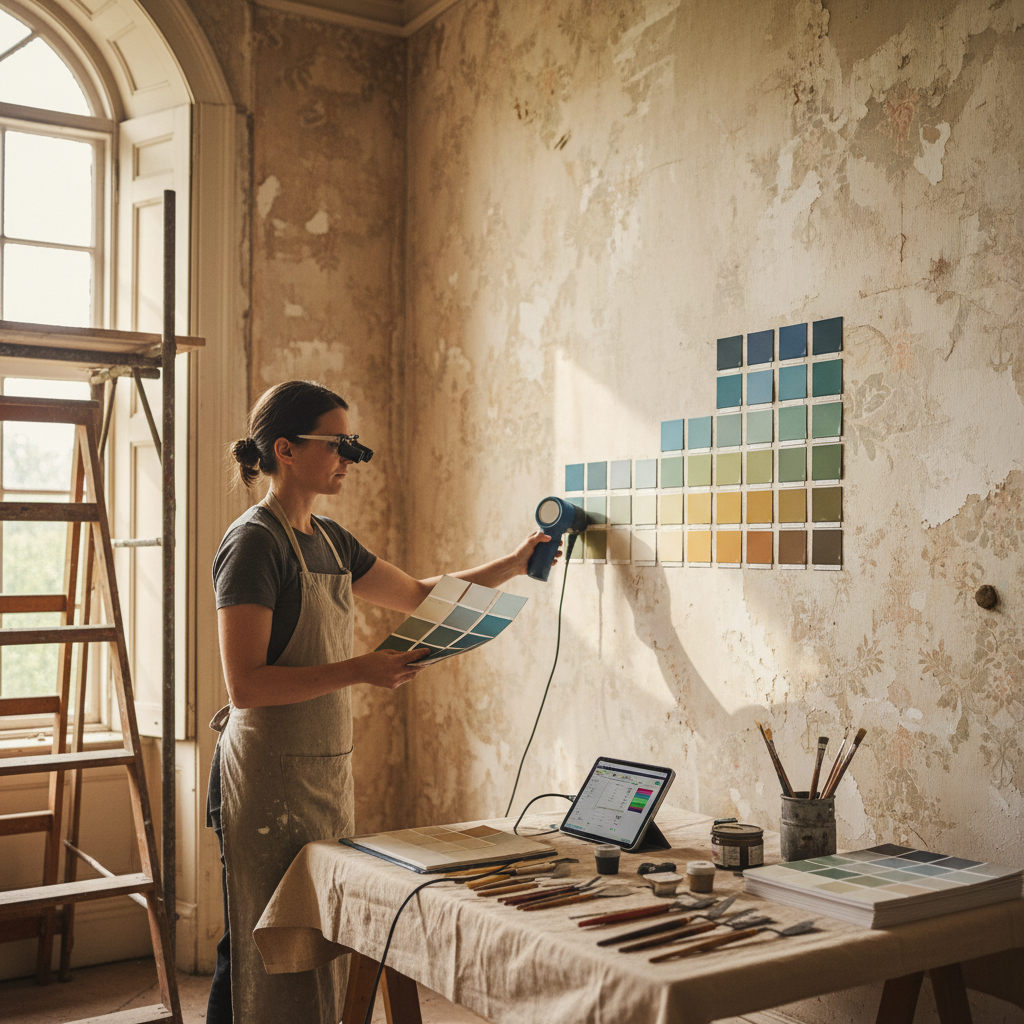
While we utilise high-precision spectrophotometers to get a digital baseline of a colour, the technology has limitations. It cannot account for the "metamerism" of a room—how the colour changes under different light sources. Our master decorators rely on decades of experience to hand-mix samples, adjusting the undertones of umber, sienna, and ochre until the match is seamless even in the transition between natural daylight and evening chandelier light.
3. Assessing Aged Patina
Sometimes, a client doesn't want the "new" version of a historical colour; they want to match the existing patina that has developed over decades. This is particularly frequent in fine gilding work or when restoring period woodwork. Replicating the soft glow of aged pigment requires a master’s touch, often involving transparent glazes to build depth.
Choosing the Right Finish for Your Period Property
In high-end Chelsea and Kensington renovations, the finish (the sheen level) is just as vital as the hue. In the 18th and 19th centuries, high-gloss finishes were a sign of extreme wealth, as they were difficult and expensive to achieve. Today, however, many heritage owners prefer the soft, breathable quality of distemper or flat oil finishes.
- Soft Distemper: Ideal for intricate ceiling roses and cornices. It is breathable and can be easily washed off in future decades without damaging the plasterwork.
- Flat Oil Paint: Provides a sophisticated, velvet-like finish that is far more durable than modern emulsions, making it perfect for grand entrance halls in Mayfair.
- Venetian Plaster: For those seeking a more textured, mineral feel that mimics the stonework found in historic Italianate villas, our Venetian plaster specialists can custom-tint finishes to match any historical palette.
Practical Advice for London Homeowners
If you are embarking on a restoration project in a heritage area like Belgravia, here are three practical steps to ensure colour success:
- View samples in situ: Never choose a colour based on a small card. We always recommend painting large 1-metre squares (or "test patches") on multiple walls within the room to see how the light moves across the day.
- Respect the orientation: North-facing rooms in London are naturally cool. To create warmth without losing the heritage feel, look for "drabs"—historical greys with a subtle yellow or red base.
- Consult the local authorities: If your property is Grade I listed, the colour of your exterior masonry or front door may be subject to strict conservation rules. Our Mayfair decorating team is well-versed in navigating these requirements.
The Painters London: Three Decades of Heritage Excellence
Since 1992, we have been the preferred choice for discerning homeowners in Kensington, Chelsea, and Belgravia. We understand that your home is your most valuable asset and a piece of London’s history. Our commitment to the art of colour matching ensures that when we finish a project, it doesn't just look "painted"—it looks as though it has always belonged.
Whether you are restoring a single room in a Kensington apartment or managing a full-scale heritage restoration of a Mayfair townhouse, our team provides the expert guidance and artisanal skill required for a flawless result.
Ready to transform your heritage property?
Experience the difference that artisanal expertise and thirty years of London heritage knowledge can make. We invite you to discuss your project with our specialists.
Book your private consultation with The Painters London today.