Venetian Plaster Maintenance: Care Tips for Luxury Homes
Venetian plaster is far more than a simple wall covering; it is a statement of timeless elegance and a testament to artisan craftsmanship. In the prestigious residences of Mayfair and Belgravia, where architectural heritage meets contemporary luxury, a polished plaster finish provides a depth and luminosity that no standard emulsion can replicate. However, to ensure this investment remains as breathtaking as the day it was applied, understanding the nuances of Venetian plaster maintenance is essential.
Since 1992, The Painters London have been at the forefront of applying and preserving these exquisite finishes. Whether you have a high-gloss Marmorino in a Kensington townhouse or a textured Travertino in a Chelsea penthouse, the longevity of your walls depends on specific care protocols. Unlike paint, which is often treated as a disposable surface, Venetian plaster is a "living" material—composed of fired limestone and water—that cures and hardens over time, becoming part of the building's fabric itself.
Understanding Your Venetian Plaster Finish
Before embarking on a maintenance routine, it is vital to identify which type of finish you have. The term "Venetian plaster" is a broad umbrella covering several distinct techniques. Polished plasters range from the mirror-like Grassello finish to the more granular, stone-like aesthetic of Marmorino. Each requires a slightly different approach to cleaning and protection.
For most luxury London interiors, the plaster is finished with a protective layer of natural beeswax or a synthetic sealer. This layer acts as a sacrificial barrier against dust, moisture, and light abrasions. If you are unsure of the specific material used in your home, our experts in Mayfair and Kensington can provide a professional assessment during a site visit.
Daily Care and Dusting
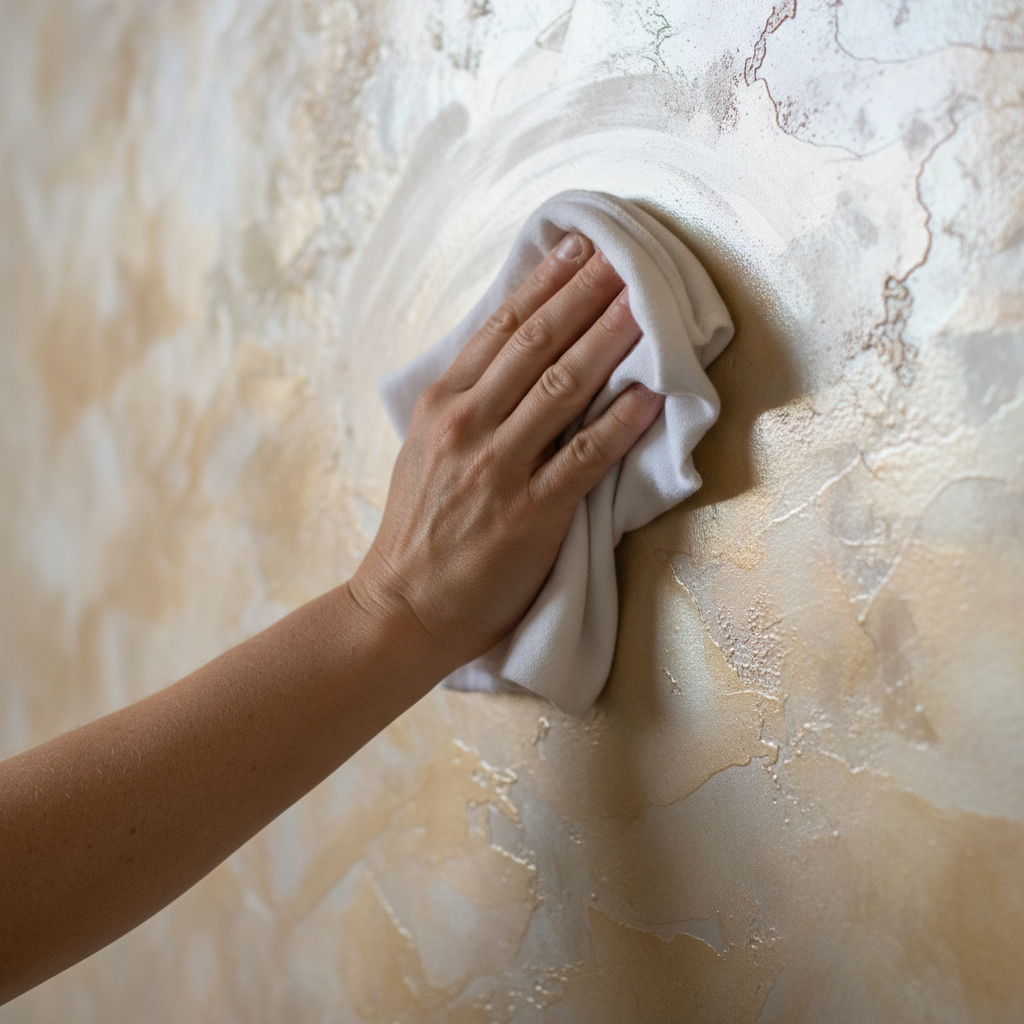
The primary enemy of a pristine plaster finish is the accumulation of fine particulates. In a bustling metropolis like London, airborne dust and pollution can eventually dull the reflective surface of your walls. The most effective maintenance tool is a simple, dry microfibre cloth or a high-quality feather duster.
Recommended Cleaning Materials:
- Microfibre Cloths: Use only clean, soft cloths to avoid scratching the surface.
- Mild Soap: A pH-neutral soap (such as a very dilute solution of Castile soap) is the only liquid that should touch the wall.
- Distilled Water: This prevents mineral deposits or "water spots" commonly associated with London’s hard water.
Avoid any abrasive sponges, "magic erasers," or chemical cleaners containing bleach or ammonia. These substances can chemically react with the lime in the plaster, leading to permanent discolouration or a breakdown of the beeswax seal. Our comprehensive services include detailed guidance on the specific products tailored to your home’s bespoke finishes.
Addressing Spills and Stains
In high-traffic areas or dining rooms in Belgravia, occasional spills are inevitable. The key to successful stain removal from Venetian plaster is speed. Because the plaster is naturally porous, liquids can penetrate the surface if the protective wax layer has worn thin.
For a fresh spill, blot—do not rub—the area immediately with a soft, dry cloth. If a mark remains, use a damp cloth with a tiny amount of pH-neutral soap. Gently wipe the area in a circular motion. Once the stain is removed, dry the area immediately with a fresh cloth to prevent water rings.
When to Wax and Reseal Your Walls
A high-end Venetian plaster finish is not a "set and forget" feature. To maintain that signature depth and lustre, the protective wax layer needs to be refreshed periodically. In most London homes, we recommend a professional rewaxing every 3 to 5 years, depending on the level of sunlight and physical contact the walls receive.
How do you know if it is time to reseal? A simple "bead test" can provide the answer. Flick a few tiny droplets of water onto an inconspicuous area of the wall. If the water beads and rolls off, the seal is intact. If the water begins to soak into the plaster and creates a dark spot, the protective barrier has diminished, and it is time to call in a specialist.
Repairing Scuffs and Chips
Despite your best efforts, furniture moves and daily life can result in minor chips or scuffs. Unlike standard paint, you cannot simply "dab" a bit of leftover plaster onto the hole. Venetian plaster is applied in multiple thin layers to create its characteristic movement; a patch applied without the correct technique will look like a flat, dull spot on an otherwise vibrant wall.
For minor scuffs that haven't broken the surface, a gentle buffing with a soft cloth and a tiny amount of specialised wax can often hide the mark. For deeper chips, we recommend professional restoration. Our team, renowned for heritage restoration, possesses the skill to colour-match and re-layer the plaster, ensuring a seamless repair that blends perfectly with the original artisan work.
Environmental Considerations in London Homes
London’s climate and the specific conditions of period properties in Chelsea play a role in plaster health. Venetian plaster is naturally "breathable," meaning it allows moisture to pass through it, which helps prevent mould growth. However, extreme fluctuations in humidity or leaks from upper floors can cause the lime to crystallise, leading to "efflorescence"—a white, powdery substance appearing on the surface.
If you notice efflorescence or bubbling, it usually indicates an underlying damp issue rather than a failure of the plaster itself. It is crucial to address the source of the moisture before attempting any surface repairs.
The Value of Professional Maintenance
While DIY dusting is encouraged, the intricate nature of Venetian plaster means that significant maintenance should be left to experts. The Painters London provide a bespoke maintenance service for luxury properties, ensuring that your wallcoverings and decorative finishes remain in showroom condition. Our artisans understand the chemistry of lime and the delicate balance required to burnish a surface to its peak radiance without damaging the substrate.
Conclusion: Preserving Your Investment
Venetian plaster is a luxury intended to last a lifetime. By following a regime of regular dusting, immediate spill management, and periodic professional resealing, you ensure that your home remains a sanctuary of sophisticated design. Whether you are looking to refresh the finish in your drawing room or require a full-scale restoration of a heritage property, we are here to assist.
To ensure your bespoke finishes receive the care they deserve, contact the leading specialists in Central London. Our expertise covers everything from contemporary polished plaster to delicate gilding and decorative arts.
Ready to restore the lustre to your walls? Book a consultation with The Painters London today to discuss your maintenance or installation needs with our master decorators.